
DODGE
Here is a detailed description of Dodge, a brand defined by attitude, horsepower, and a distinct “muscle first” philosophy.
1. Brand Overview & Positioning
Dodge is an American automobile brand currently owned by Stellantis.1 While its sibling brand Chrysler focuses on premium family comfort, and Jeep focuses on off-road capability, Dodge is the dedicated performance brand of the group.
Dodge positions itself as the “Brotherhood of Muscle.” In recent years, it has aggressively shed its identity as a generalist automaker (dropping minivans and sedans) to focus almost exclusively on high-performance vehicles, SUVs, and modern muscle cars.2
Key Distinction: Dodge marketing is loud, irreverent, and nostalgic, often appealing to enthusiasts who value raw power and aggressive styling over fuel economy or subtle luxury.
2. History: From Parts to Power
The history of Dodge is a shift from reliable utility to extreme performance.
| Era | Focus | Key Events |
| 1900–1914 | Parts Suppliers | The Dodge Brothers (John and Horace) originally built engines and chassis for Ford and Oldsmobile before making their own cars. |
| 1914–1928 | The Independent Era | Dodge established a reputation for durability. They were famously the first to use an all-steel body (vs. wood frames). |
| 1928 | Acquisition | Walter P. Chrysler bought Dodge, making it the mid-priced division of the Chrysler Corporation. |
| 1960s–1970s | The Muscle Era | Dodge became a legend on the street and drag strip with the Charger, Challenger, and Super Bee, powered by the 426 HEMI. |
| 1990s–2000s | Resurgence | The launch of the Viper (1992) and the Ram truck (rebranded in 1994) revitalized the company’s image. |
| 2015–2023 | The Hellcat Era | Dodge democratized 700+ horsepower engines, putting supercharged V8s into almost every vehicle they sold. |
3. Engineering Icons
Dodge’s reputation is built on specific engineering milestones that prioritize speed and power:
-
The HEMI® V8: Named for its hemispherical combustion chambers, this engine design allowed for higher efficiency and power.3 It is perhaps the most famous engine nameplate in American history.
-
The Viper V10: In the 90s, Dodge took a truck engine, recast it in aluminum with help from Lamborghini (then owned by Chrysler), and created a massive V10 for the Dodge Viper sportscar.4
-
The Hellcat: A supercharged 6.2L HEMI V8 introduced in 2015.5 It produced 707 horsepower (and eventually over 1,000 HP in the Demon 170), forcing competitors to rethink their performance strategies.
4. Key Vehicles (Past & Present)
The New Generation (2024/2025+)
Dodge is currently executing a massive pivot known as “e-Muscle,” replacing gas V8s with electrification and twin-turbo inline-6 engines.
-
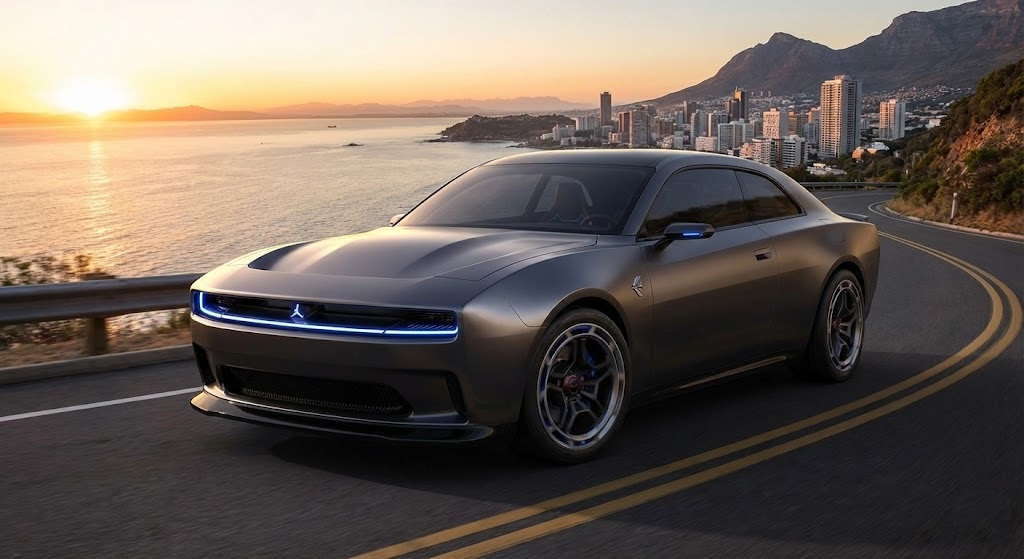
Dodge Charger (New): Re-launched as the world’s first “electric muscle car” (Charger Daytona). It features an “Fratzonic Chambered Exhaust” to make the EV sound loud. It is also available with the “Sixpack” Hurricane Inline-6 gas engine.
-
Dodge Hornet: A compact utility vehicle (CUV) that serves as the entry point to the brand.6 It is available as a plug-in hybrid (PHEV), emphasizing performance in the small SUV segment.7
-
Dodge Durango: A three-row SUV that has famously been available with massive engines, including the Hellcat engine, serving as a “muscle car for the family.”8
Legends (Recently Retired)
-
Challenger (2008–2023): A retro-styled coupe that remained true to its 1970s roots. It became the best-selling muscle car in the US in its final years.
-
Charger (2006–2023): The four-door sedan version of the muscle car. It was the only V8, rear-wheel-drive sedan available at a mass-market price point.
-
Dodge Viper: A raw, dangerous, V10-powered supercar without traction control or luxury features.9 Discontinued in 2017.
-
Dodge Grand Caravan: While Dodge is now a muscle brand, they (along with Chrysler) invented the minivan. The Caravan was the best-selling minivan in the US for decades before being replaced by the Chrysler Pacifica.
5. The Future: “Fratzog” and Electrification
Dodge faces a unique challenge: How to sell electric cars to people who love the noise and smell of gasoline?
-
The Fratzog: Dodge has revived an old triangular logo from the 1960s (called the Fratzog) to distinguish their electric vehicles from their gas vehicles.
-
Performance EVs: Unlike Tesla or Lucid which focus on range and tech, Dodge’s EV strategy focuses on drag-strip performance, simulated shifting sensations, and artificial exhaust noise to keep the “visceral” driving experience alive.10
Summary Table
| Feature | Details |
| Headquarters | Auburn Hills, Michigan, USA |
| Famous Slogan | “Domestic. Not Domesticated.” |
| Primary Competitors | Ford (Mustang), Chevrolet (Camaro/Corvette) |
| Key Identity | Aggressive, Loud, Nostalgic, Horsepower-obsessed |
| Current Shift | Replacing the V8 HEMI with the “Banshee” EV powertrain and “Hurricane” I6 |